Sayyid Al-Hakeem Expresses Optimism About Iraq's Future Despite Economic Reality Difficulty
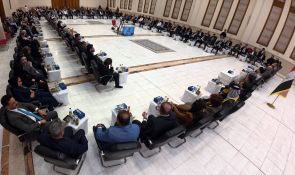
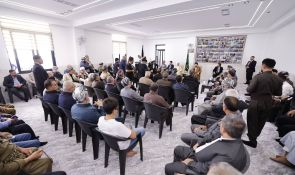
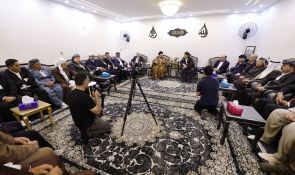
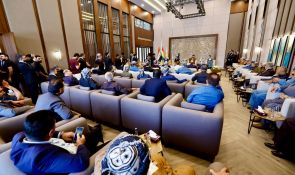
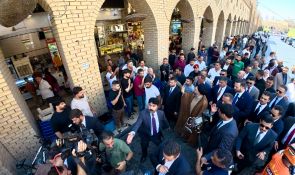
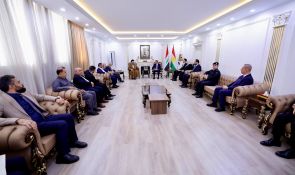
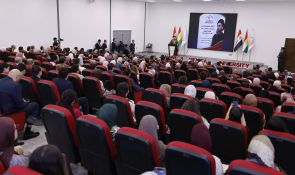
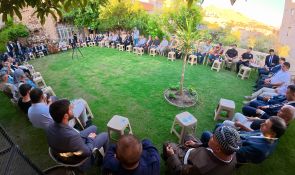
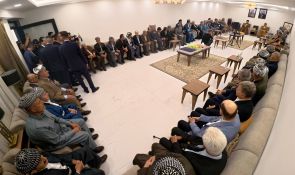
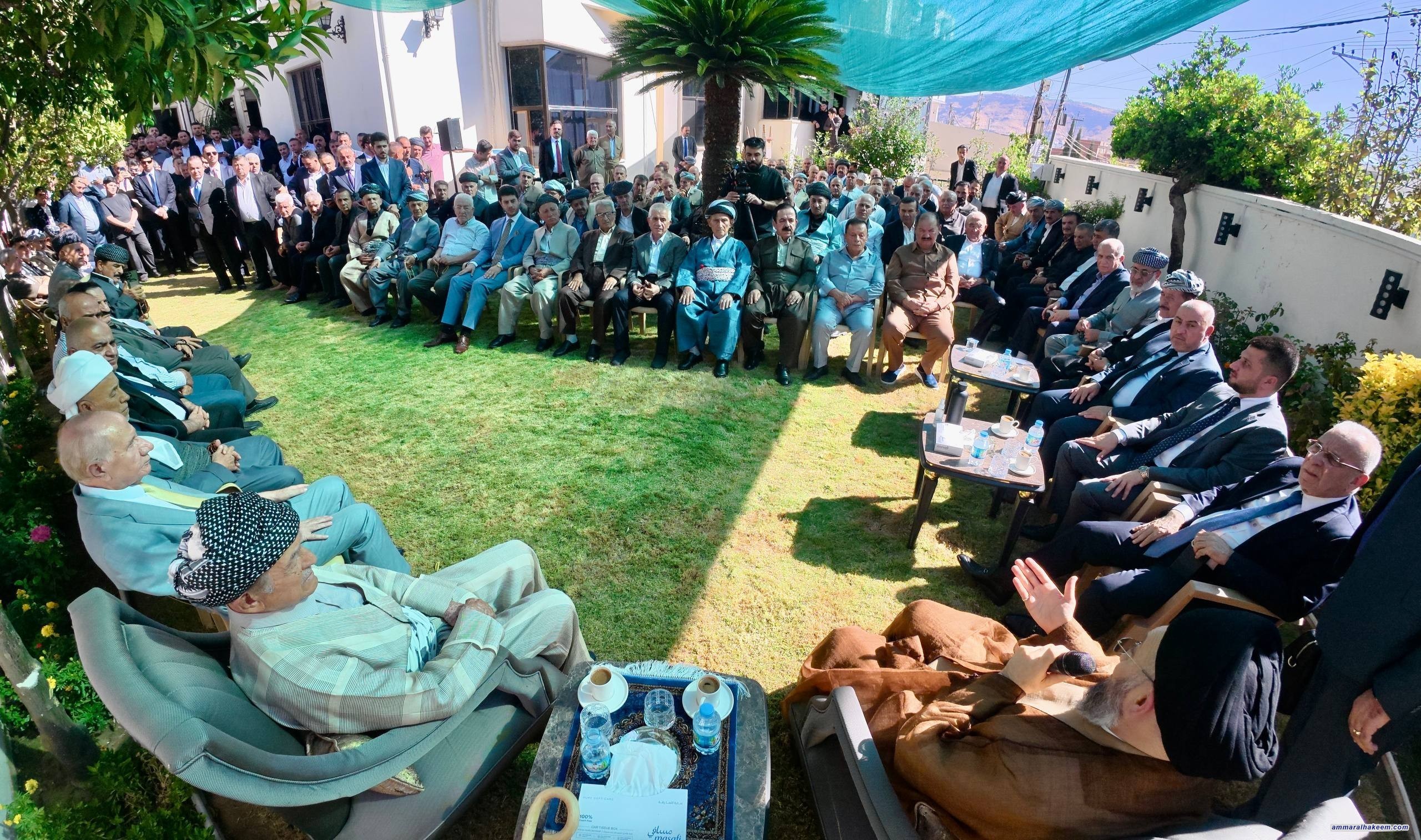
As part of engagement with social figures, and during his tour of Dohuk Governorate, His Eminence Sayyid Al-Hakeem, Head of the National State Powers' Alliance, visited the guesthouse of Sheikh Mohammed Kalhi Rekani and met with a gathering of the sheikhs and dignitaries of Dohuk Governorate, recalling the shared history with the people of Iraqi Kurdistan at key junctures in Iraq's history of confronting dictatorship, and between the Kurdish people and the family of Imam Al-Hakeem (may his soul be sanctified), and H.E. noted that Iraq is living in honor and dignity after ridding itself of a regime that committed crimes in Halabja and through the mass graves, considering dictatorship an era that has passed irreversibly, and calling for strengthening the relationship among the sons of one people, bearing responsibility, and sustaining mutual engagement with the people of Kurdistan.
H.E. said that problems are to be expected and may seem natural in a country like Iraq, for difference is not a flaw; rather, the flaw is the inability to resolve differences, considering the constitution a national document upon which Iraqis are united, calling for a return to the constitution in matters of disagreement and to the Federal Court for the interpretation of the constitution, stressing the strengthening of trust among all parties, and noting that the current stage is one of Iraqis governing themselves.
H.E. affirmed that Iraq can only be compared to itself, as the current circumstance is to be measured against what preceded it, commending the efforts of Iraqis in restoring their country and their adherence to dialogue, understanding, meeting halfway, and showing flexibility to resolve crises, and expressing his optimism about Iraq's situation despite the difficulty of the economic reality, because the current war cannot last long given its impact on the entire world, calling for drawing lessons from the current crisis by diversifying export outlets through a pipeline network toward the Red Sea and the Mediterranean, and diversifying the economy by activating productive sectors such as agriculture, industry, tourism, investment, and modern technology, and setting aside oil revenues for construction, reconstruction, and future generations.