Sayyid Al-Hakeem: Economic Challenge Requires Iraqis to Stand Together Similar to Previous Challenges
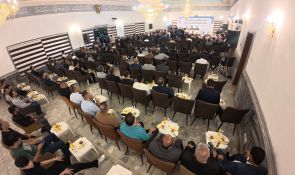
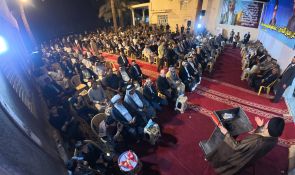
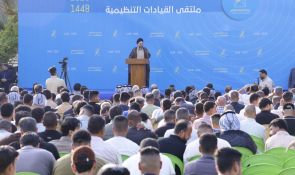
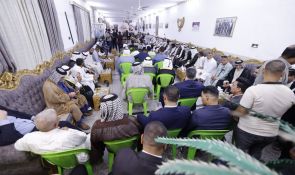
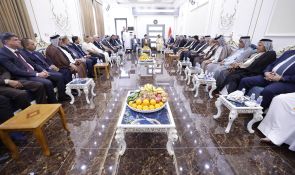
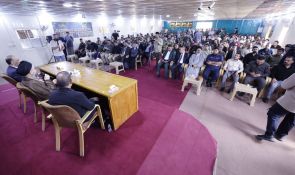
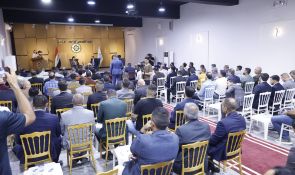
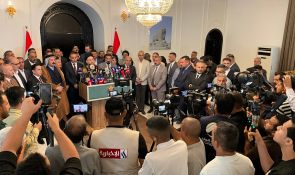
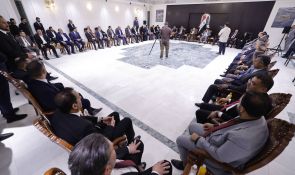
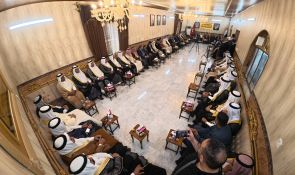
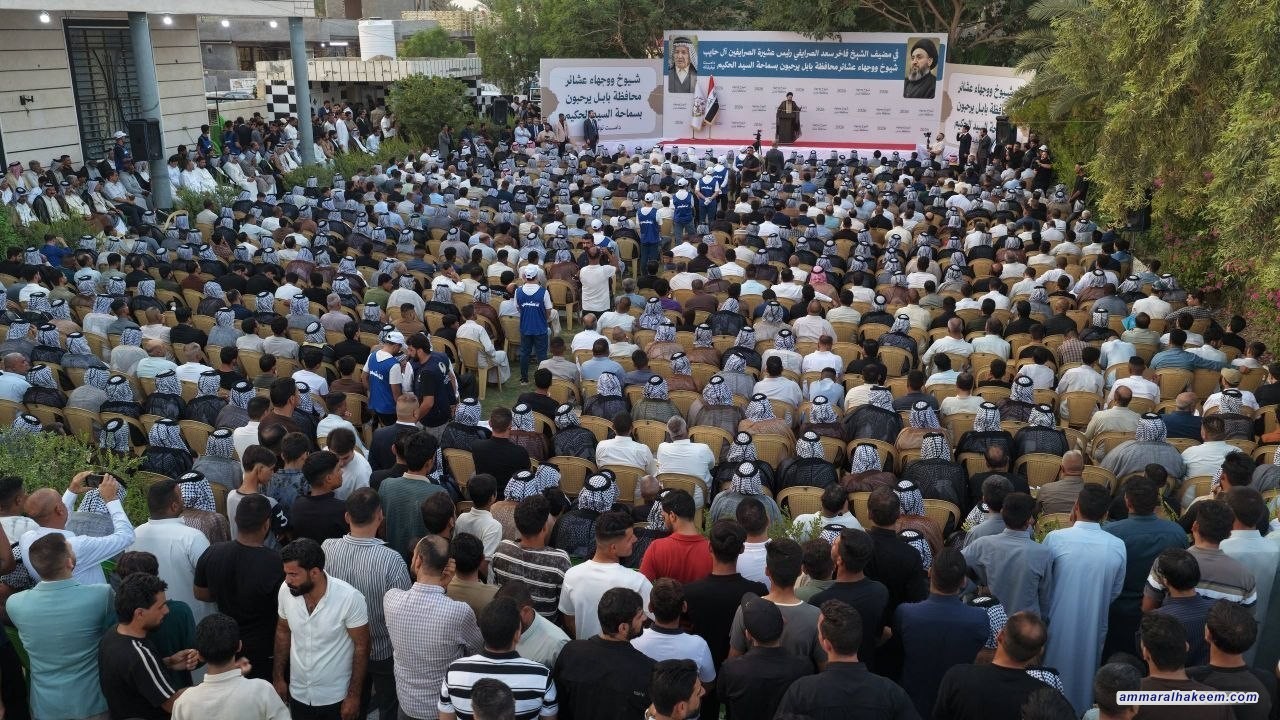
At the guest house of Sheikh Fakhir Saad Al-Sarayfi, His Eminence Sayyid Al-Hakeem, Head of the National State Powers' Alliance, met a group of sheikhs and dignitaries of the Al-Sarayfi tribe and the tribes of Babil Governorate, recalling with them a distinguished history of devotion and sacrifice for Iraq, and commending those glories, contributions, and sacrifices that helped bring the country to where it stands today.
H.E. explained that such meetings serve as a platform for discussing the country's affairs, pointing to the near end of the International Coalition's mission to counter terrorism, with the mission concluding entirely on 30 September, making that day a day of national sovereignty.
H.E. affirmed that Iraq has moved beyond its social, security, and political challenges, which are now a thing of the past, stressing the need to address the economic challenge and strengthen the economy in line with Iraq's potential, foremost its human wealth.
H.E. called for standing together in facing the economic challenge, just as Iraqis stood together in facing previous challenges, pointing out that the economic challenge is tied to internal and external factors, including the decline in oil production and exports, in a country that relies on oil for 94 percent of its budget. H.E. called for being open with the people about the nature of the challenge so that they can shoulder their responsibilities toward it, explaining that the regional crisis has become an international problem because of its impact on the global economy, which means there is an international will to resolve it and restore stability, and stressing the importance of Iraq's regional and international role and of its taking the initiative to find solutions to the region's crises.
H.E. called for drawing lessons from the current economic challenge by diversifying Iraqi oil export outlets through a pipeline network toward the ports of the Mediterranean and the Red Sea, warning against complacency on this file once the Strait is reopened. H.E. stressed the need to invest Iraq's resources, stimulate the productive sectors, and free Iraq from the rentier economy by relying on agriculture, industry, tourism, investment, and modern technology, calling for practical steps to achieve this and for adopting the activation of the agricultural sector as a national approach and state project.
H.E. said that Babil possesses agricultural, industrial, and tourism assets, calling for attracting investment to it and turning it into a tourist destination befitting its historical and religious landmarks. H.E. stressed the importance of the triad of paying the dues of employees, farmers, and contractors, given its role in stimulating the economy, providing services and job opportunities, and sustaining economic development.
H.E. called for addressing social problems through a committee of sages comprising tribal sheikhs, judges, professionals, academics, and clerics, describing this committee as a support to the judicial institution rather than a substitute for it, and urging the people of Babil to study the proposal and move to activate it. H.E. described drugs as "silent terrorism", pointing to the importance of distinguishing between the dealer and the user, while stressing the importance of awareness, prevention, and treatment in dealing with users.